Accuphase E-203
The Accuphase E-203 is a high-end integrated stereo amplifier introduced in the late 1970s. It is a clear example of Accuphase's commitment to precision engineering and exceptional sound quality.
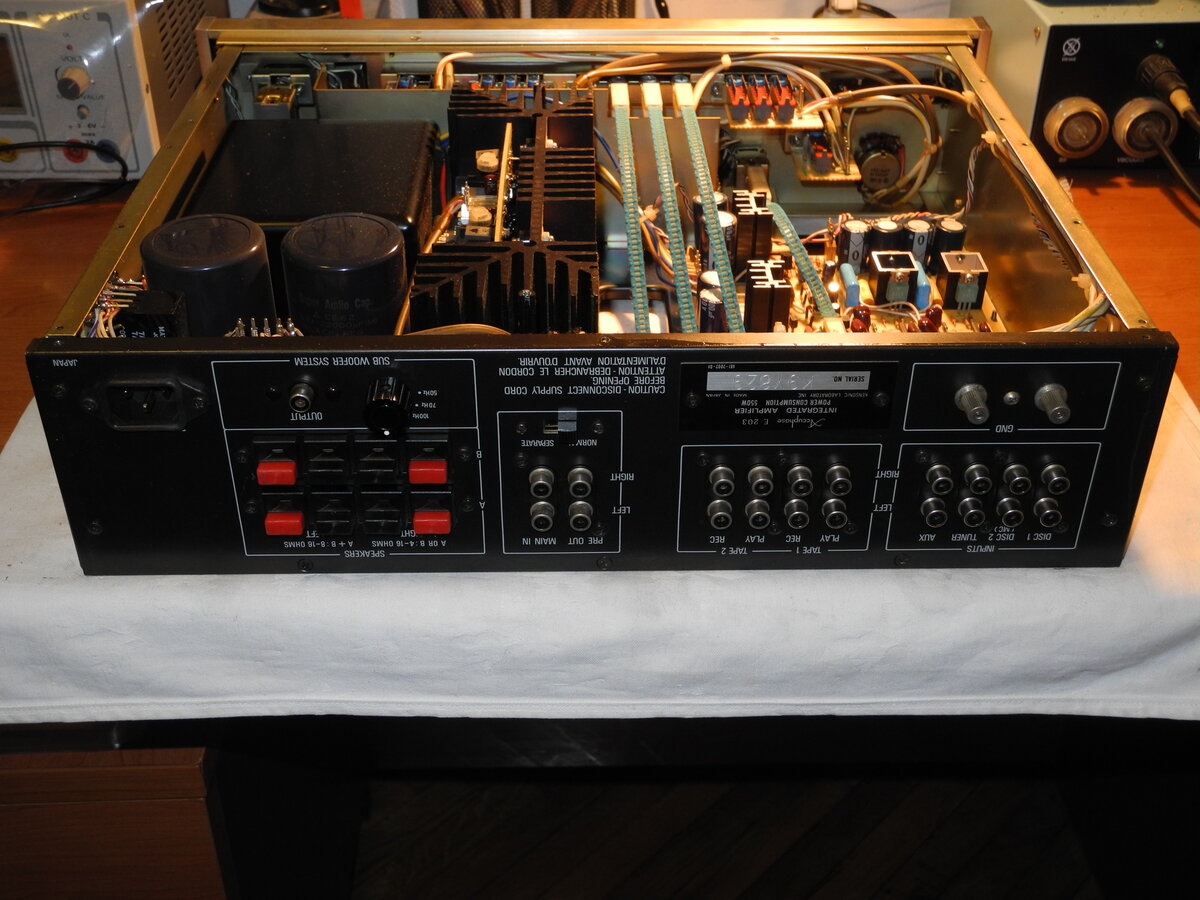
The power supply is built around a large transformer and uses two huge 22000µF filter capacitors for stable current delivery.
Two MOSFET transistors, Hitachi 2SK134 and 2SJ49, are used per channel in the output stage. The pre-driver section is based on the STK3082 module and a complementary pair of transistors, 2SD669 and 2SB649. A single protection relay is used for both speaker channels.
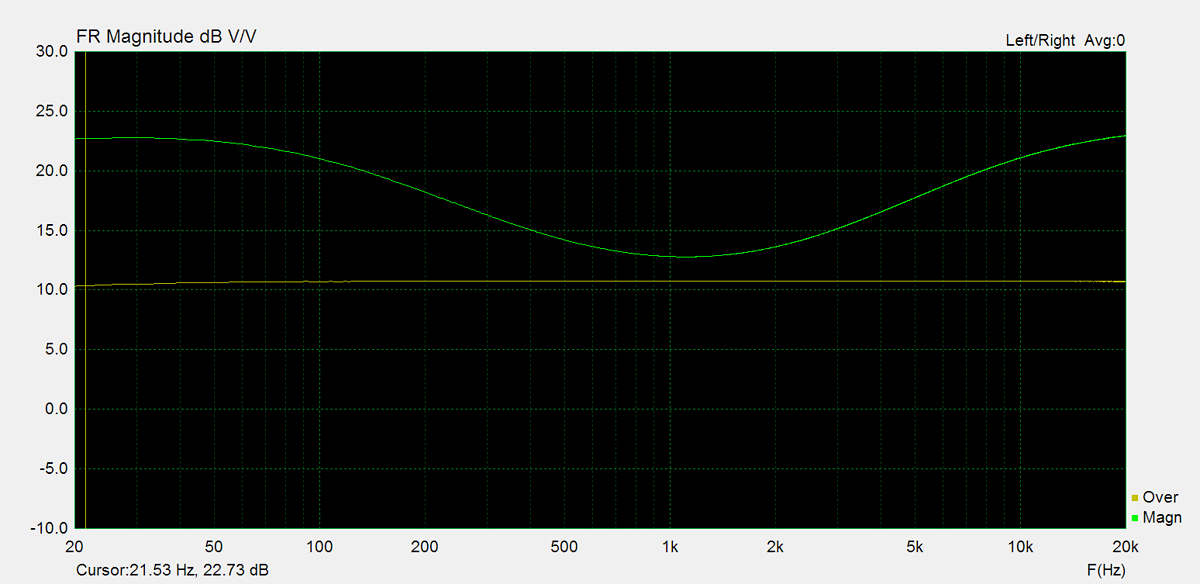
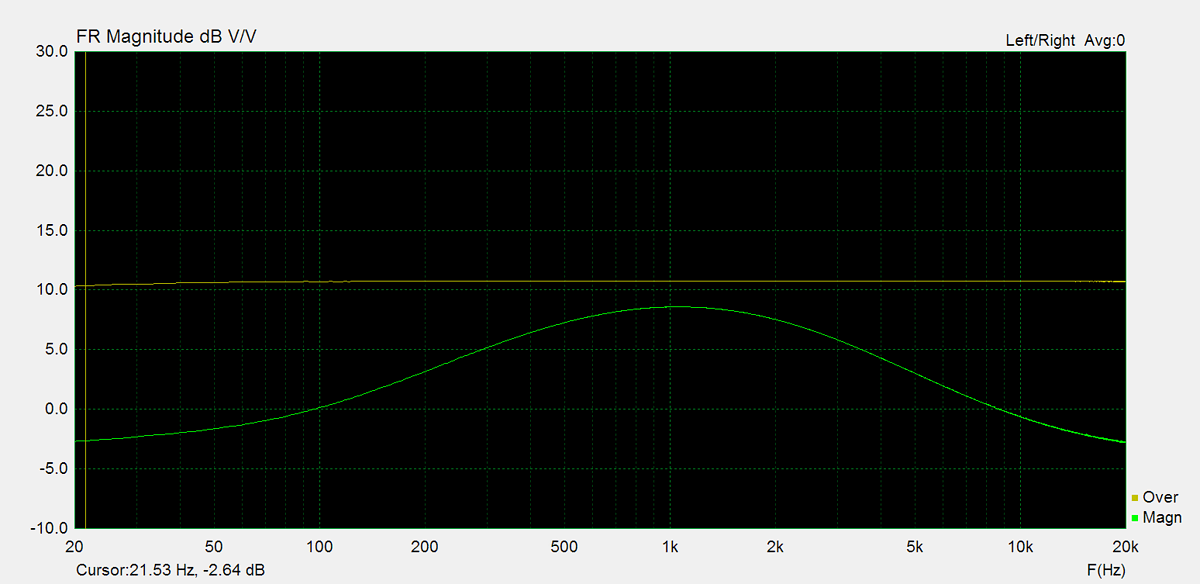
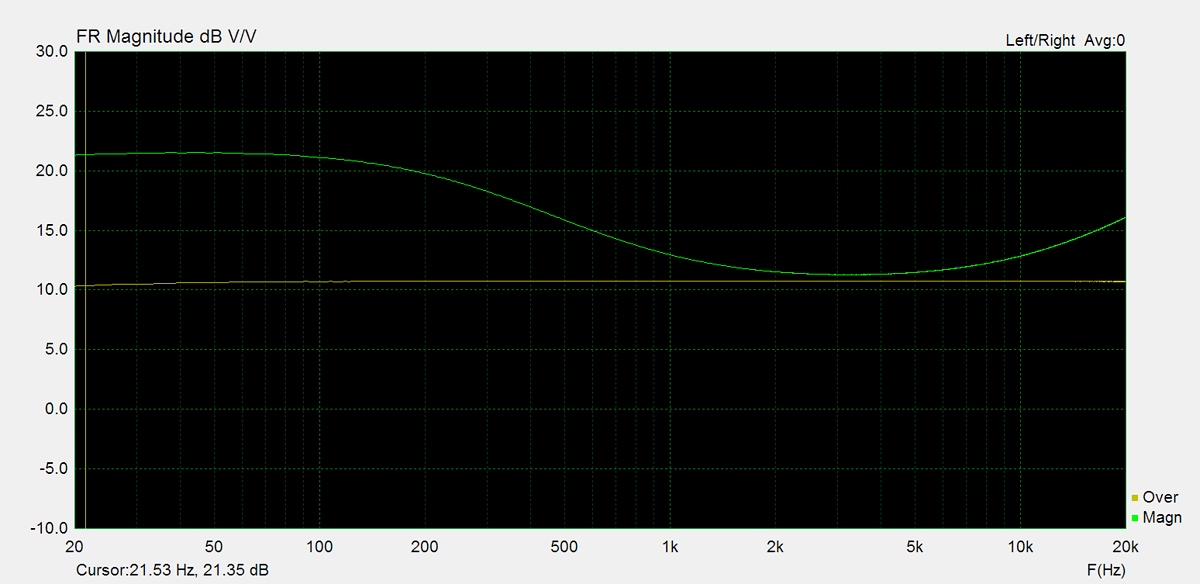
The loudness function has two settings: one boosts only the bass, while the other slightly adds treble. An interesting feature is the subwoofer output for an external amplifier, where the left and right signals are summed into a single mono, low-frequency signal.
Build quality is exceptional, with a solid aluminium front panel finished in light gold. It features large metal knobs and small, signature Accuphase function buttons.
The E-203 delivers an excellent soundstage and highly accurate, impressive performance. It is no wonder that it is a favorite among audiophiles and vintage audio enthusiasts.
Manufacturer: Accuphase
Status: Active company
Official website: accuphase.com
User manual: e-203en.pdf




General Specifications
Maximum power (8Ω): 70WMaximum power (4Ω): 90W
Frequency response (20Hz-20kHz): ±0.2dB
THD+N: 0.02%
IMD: 0.005%
Signal to noise ratio (Line): 82dB
Signal to noise ratio (MM): 80dB
Signal to noise ratio (MC): 75dB
Input sensitivity (Line): 120mV
Input sensitivity (MM): 1.8mV
Input sensitivity (MC): 0.09mV
Damping factor: 50
Speaker load impedance: 4Ω-16Ω
Dimensions (WHD): 445×128×370mm
Weight: 14.7kg
Produced: 1979-1983
Initial price: 1400DM
Measured Values
Maximum power (8Ω): 73WFrequency response (20Hz-20kHz): <0.1dB
Channel imbalance: <0.1dB
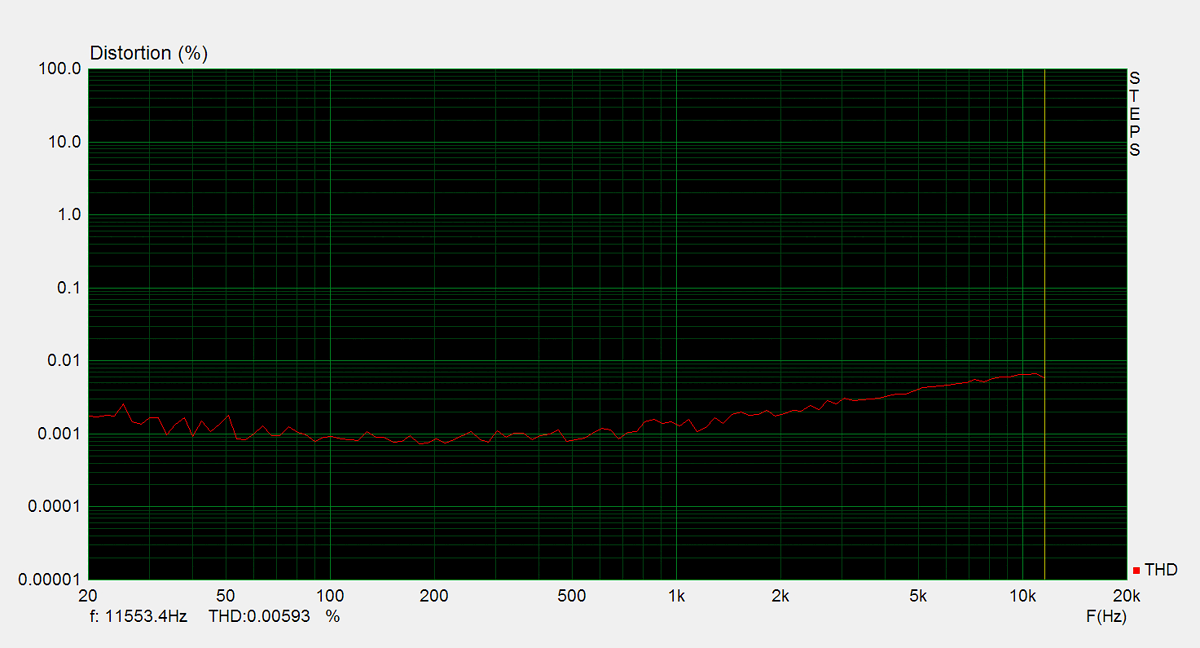
THD (1kHz, 1W): 0.0018%
THD+N (1kHz, 1W): 0.013%
THD (1kHz, 20W): 0.0016%
THD+N (1kHz, 20W): 0.007%
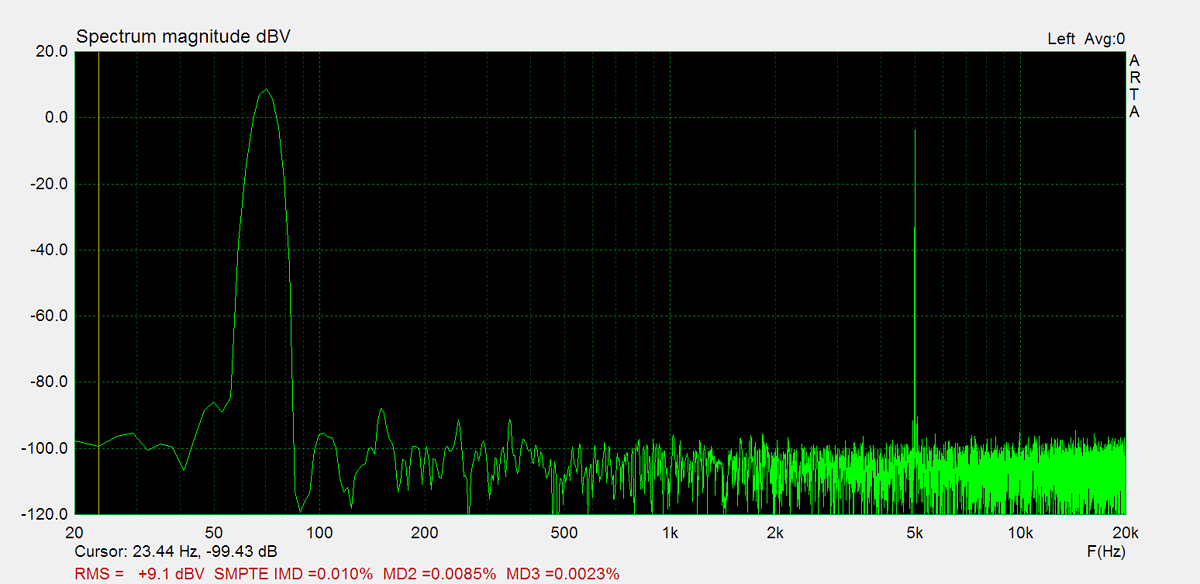
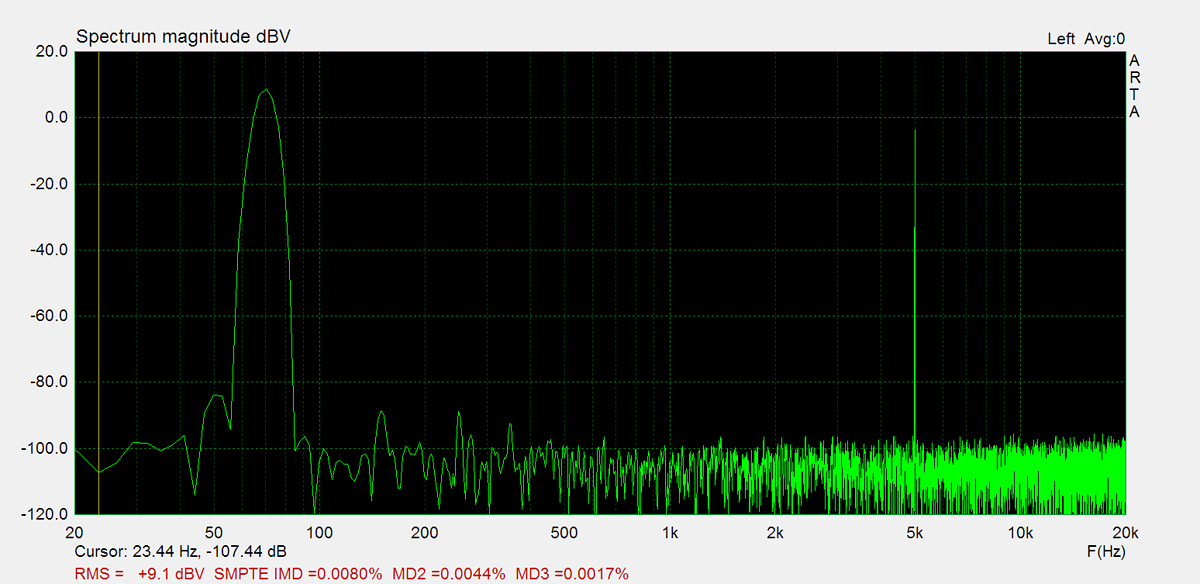
IMD (70Hz, 5kHz, 1W): 0.01%
Noise: -69.1dB
Amplification (Line): 204.8
DC offset L: -1.7mV
DC offset R: -1.6mV
Factory Specification Sheet
Factory specification images are sourced directly from the device's original service manual or user manual. These documents are produced by the manufacturer and provide authoritative information on the product's specifications.


Maximum Power
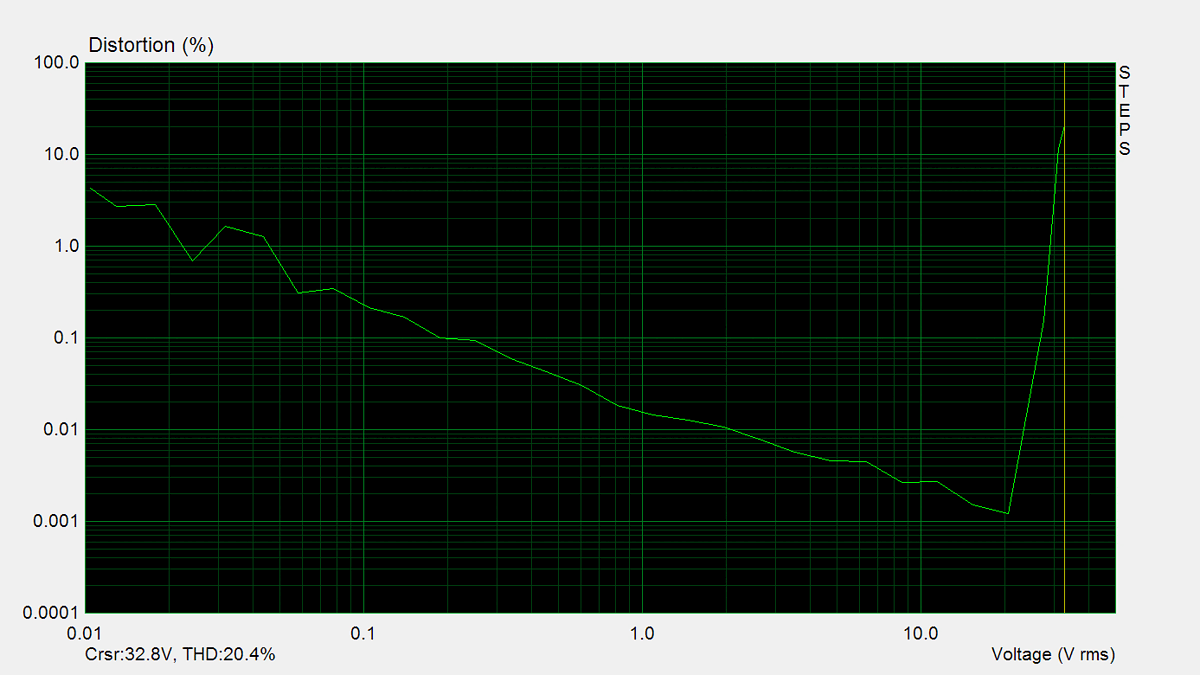
Maximum power is measured using 8Ω resistors on both channels. A 1kHz sine wave input signal is applied and gradually increased until higher harmonics rise significantly. Typically, this is the point at which output clipping occurs.


Frequency Response
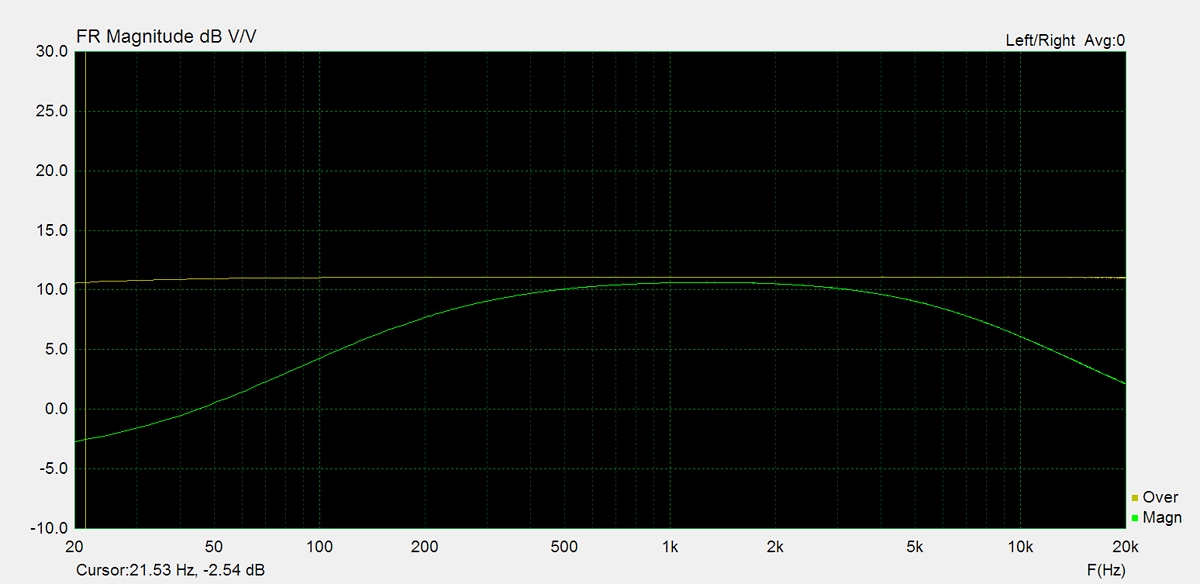
Frequency response is measured using several equalizer settings. 'Flat' indicates the tone controls are either turned off or set to their neutral position. 'Max' and 'Min' refer to the maximum and minimum tone control positions, respectively. In the phono section, the expected response follows the RIAA equalization curve.








Residual Noise
These graphs display the noise levels at various volume positions. To eliminate any interference from the input signal, the input lines are shorted during the measurement. Generally, the noise is highest at the mid-point of the volume range (50%)


Distorsion
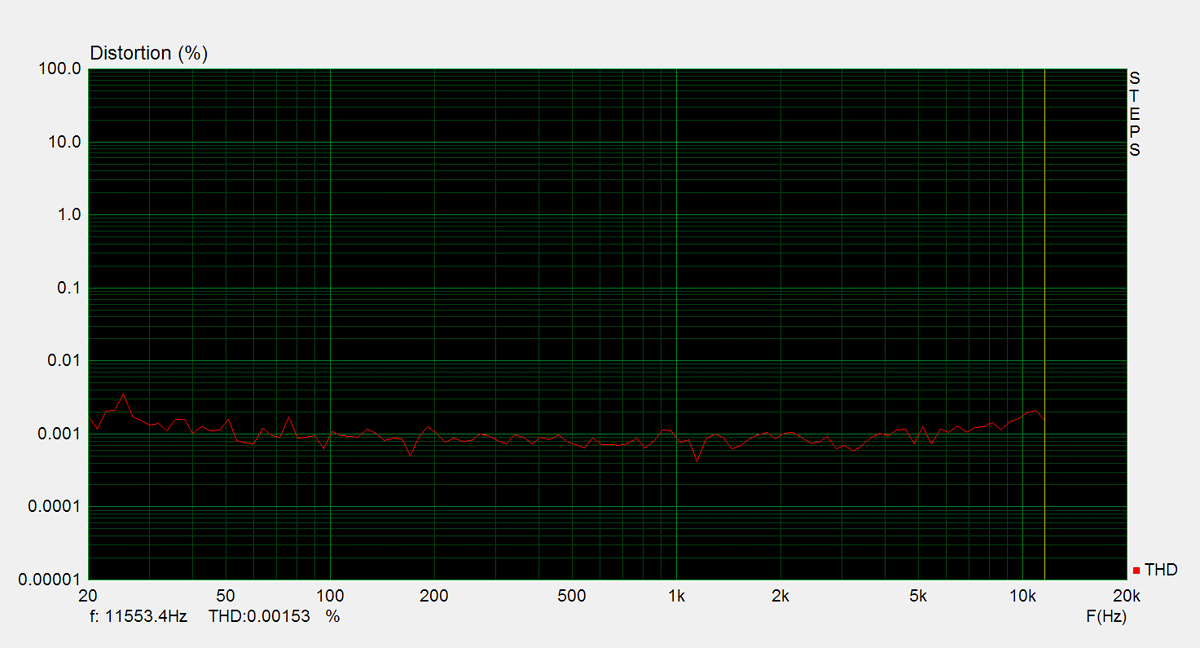
Total harmonic distortion (THD) is measured using a 1kHz sine wave input, with the output level adjusted to meet different conditions. Intermodulation distortion (IMD) is measured using 'two sine' input signal. THD versus voltage is measured with a 1kHz sine wave input, while THD versus frequency is measured at various output levels.